
AI Isn't Saving You Time. It's Changing How You Spend It.
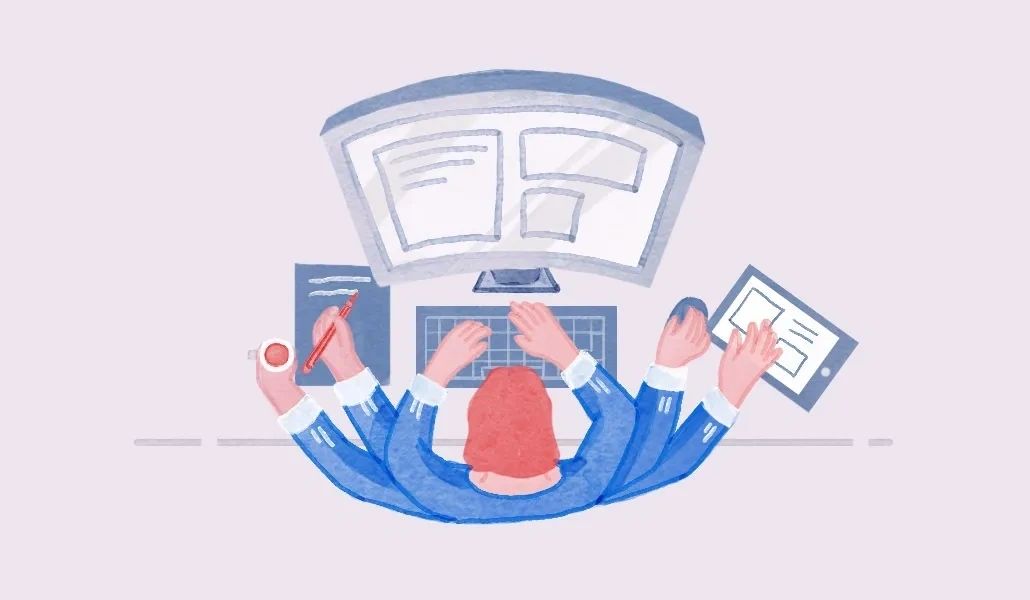
Most businesses are asking the same question about AI: how do we get more people using it? The assumption being straightforward. That AI reduces the burden of routine work, freeing people for higher-value tasks. The productivity gains must therefore be inevitable.
But a growing body of research suggests the reality is more complicated. And for anyone who has spent serious time working with AI, the findings won’t come as a surprise.
The Intensity Challenge
Researchers at UC Berkeley recently spent eight months embedded inside a 200-person tech company, tracking what happened after employees adopted generative AI tools. Across months of observation and in-depth interviews, they found something that AI-enthusiastic leadership teams should take note of: AI didn’t reduce the workload of those studied. It intensified it.
Workers operated at a faster pace. They took on tasks that previously belonged to other people. They worked through breaks and into evenings. Not because anyone told them to, but because AI made doing more feel possible, accessible and rewarding. Product managers started writing code. Researchers picked up engineering tasks. People filled gaps they would previously have outsourced or deferred entirely.
The productivity metrics looked impressive. But beneath them, something else was happening. Workloads quietly expanded. Natural pauses disappeared. The boundary between work and rest became easier to cross. Workers reported feeling more productive while simultaneously feeling busier than before. The Berkeley team explicitly frame this as work intensification: AI removes friction and expands scope, so the organisation gets more throughput while individuals experience more pressure, not less.
The Perception Gap
This disconnect between perceived and actual productivity is not limited to one study. In mid-2025, METR ran a randomised controlled trial with experienced software developers working on their own open-source repositories. Before starting, the developers predicted AI would speed them up by 24%. After completing the study, they self-reported that it had helped by around 20%.
The measured result was the opposite. Developers using AI tools took 19% longer to complete their tasks. They were slower but genuinely believed they were faster. That gap between perception and reality is the hidden challenge that is emerging in business-wide AI implementations. You cannot recognise a problem you cannot see, especially if it is one that runs contrary to the standardised expectation.
This pattern is showing up in broader data too. An NBER working paper published in February 2026, surveying almost 6,000 CEOs, CFOs and executives across the US, UK, Germany and Australia, found that over 80% of firms reported no measurable impact from AI on either employment or productivity over the past three years. ManpowerGroup’s 2026 Global Talent Barometer, covering nearly 14,000 workers across 19 countries, found that while regular AI use increased 13% in 2025, confidence in using the technology dropped 18%.
Where the Time Actually Goes
The UC Berkeley researchers identified three mechanisms that explain how AI intensifies rather than lightens work.
The first is task expansion. Because AI can fill knowledge gaps and provide rapid feedback, people increasingly attempt work they would previously have avoided. This feels empowering and often it is. But every new task someone takes on creates downstream demands: code that needs reviewing, decisions that need validating, outputs that need quality-checking. The individual feels capable. The system absorbs hidden load.
The second is boundary erosion. AI removes the friction of starting a task. There is no blank page to face, no complex setup required. A conversational prompt can be all it takes. This makes it easy to squeeze work into moments that used to be breaks. A prompt during lunch. A quick iteration while waiting for a meeting. A “just one more” before logging off. None of these feel like overwork in the moment. But over time, they eliminate the natural pauses that support recovery and clear thinking.
The third is what the researchers describe as increased parallelisation. AI enables a rhythm of managing multiple threads simultaneously: drafting while an AI generates alternatives, running several agents at once, reviving tasks from the backlog because AI can handle them in the background. The sense of momentum is real but so is the constant context-switching and the growing pile of open items.
Gartner’s recent Future of Work research highlights employees’ mental fitness as a major hidden cost of AI. It popularises the term “workslop” for the abundance of fast but low-quality output produced by or with AI that creates more work downstream than it saves upstream. Their recommendation is pointed: organisations should focus on saving employees effort, not just time.
The Reframe
None of this is an argument against AI. The capability gains are real. The tools are getting better rapidly. But many conversations about AI productivity are asking the wrong question.
The question is not whether AI saves time. It clearly can, on individual tasks. The question is where that saved time goes. If it goes into more tasks, more threads, more scope and fewer breaks, then AI is not making work lighter. It is making it denser. The total cognitive effort may be similar to what it was before AI. It is just compressed into a different shape, applied at higher intensity, with fewer natural recovery points.
This matters because many organisations are building AI strategies around adoption targets and time-saving metrics, driven by a financial desire to see an ROI for all that new licence cost. If the measure of success is “hours saved,” you will systematically miss three things: the growth in parallel work, the rise in rework from poor-quality AI output, and the erosion of recovery time that keeps judgement sharp.
The companies that will get the most from AI are not the ones that adopt fastest. They are the ones that design how AI fits into the way people actually work, with deliberate attention to pace, boundaries and the quality of output rather than just the quantity.
AI is not saving time. It is changing how time is spent. The question is whether your organisation is shaping that change or letting it shape you.
Sources
Ranganathan, A. and Ye, X.M. (2026). “AI Doesn’t Reduce Work — It Intensifies It.” Harvard Business Review, February 2026.
Becker, J., Rush, N., Barnes, B. and Rein, D. (2025). “Measuring the Impact of Early-2025 AI on Experienced Open-Source Developer Productivity.” METR, arXiv:2507.09089, July 2025.
Yotzov, I., Barrero, J.M., Bloom, N. et al. (2026). “Firm Data on AI.” NBER Working Paper 34836, February 2026.
ManpowerGroup (2026). “Global Talent Barometer 2026.” January 2026.
Gartner (2026). “Top Future of Work Trends for CHROs in 2026.” January 2026.